|
WELCOME to "NUTRITION NUGGETS" brought to you by Connecticut Kids & Family"NUTRITION NUGGETS" is our section of Nutrition Tips for the Whole Family. Most of our posts are written by Tiffany Glenn, M.S., R.D.,L.D. Registered Dietitian. Good health is important from the inside out. Learn more about how Tiffany nourishes her body from the outside by checking out her website at www.tiffanyglenn.com. Tiffany lives in Lorena, TX with her husband Tim, son age 17 and daughters’ ages 11 and 15.
www.tiffanyglenn.com |
|
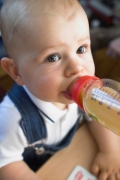
Baby Bottle MouthYour baby’s teeth are at risk for decay as soon as they appear. Tooth decay in infants and toddlers is very common in the United States and is referred to as Baby Bottle Tooth Decay.
Most of the time this happens because children are frequently given liquids with sugar, soda, juice, milk, formula, drink mixes, etc.
Tooth decay can occur when the baby is put to bed with a bottle, or when a bottle is used as a pacifier for a fussy baby. The sugary liquids pool around the teeth while the child sleeps. Bacteria in the mouth use these sugars as food. They then produce acids that attack the teeth. Each time your child drinks these liquids, acids attack for 20 minutes or longer. After multiple attacks, the teeth can decay.
According to the American Dental Association, the good news is that tooth decay is almost completely preventable.
• Don’t share saliva with the baby through common use of feeding spoons or licking pacifiers and giving them to babies.
• After each feeding, wipe the baby’s gums with a clean, damp gauze pad or washcloth. This will remove plaque and bits of food that can harm erupting teeth. When your child’s teeth begin to erupt, brush them gently with a child’s size toothbrush and water. (Consult with your child’s dentist or physician if you are considering using fluoride toothpaste before age two.)
• When your child can be counted on to spit and not swallow toothpaste (usually not before age two), begin brushing the teeth with a pea-sized amount of toothpaste. The American Dental Association recommends fluoride toothpaste; ask your dentist about your child’s fluoride needs.
• Brush your child’s teeth until he or she is at least six years old.
• Place only formula, milk or breast milk in bottles. Avoid filling the bottle with liquids such as sugar water, juice or soft drinks.
• Infants should finish their bedtime and naptime bottles before going to bed.
• If your child uses a pacifier, provide one that is clean — don’t dip it in sugar or honey, or put it in your mouth before giving it to the child.
• Encourage children to drink from a cup by their first birthday and discourage frequent or prolonged use of a training (sippy) cup.
• Encourage healthy eating habits that include a diet with plenty of vegetables, fruit and whole grains. Serve nutritious snacks and limit sweets to mealtimes.
Ensure that your child has adequate exposure to fluoride. Discuss your child’s fluoride needs with your dentist or pediatrician.
Written by Tiffany Glenn, M.S., R.D.,L.D. Registered Dietitian
|

|
Eat Your Veggies!Your mom always told you to eat your veggies, but the truth is that most people don’t get enough of them in their diet. When you skip out on vegetables, you are missing lots of vitamins and minerals as well as some fiber. Here are some easy ways to up the veggie consumption in your household.
Try your spinach raw. If your kids will eat salad, spinach leaves blend in nicely!
Stir fry in a little olive oil or grill. This adds a different flavor than regular steaming.
Puree and add them to spaghetti sauce. Add small pieces to casseroles.
Keep frozen veggies on hand. They have about as much nutritional value as fresh and they are quick, convenient and cost effective.
Add raw veggies to sandwiches such as sliced carrots, bell peppers or sprouts.
Double the amount of veggies in soup recipes.
Add veggies to rice. After all, you should eat two times the amount of veggies compared to starches.
Add some low fat salad dressing to raw veggies for dipping and a bit of flavor.
Broil sliced zucchini or squash with some olive oil, garlic powder and shredded mozzarella cheese.
Drink vegetable juice.
Make zucchini or carrot muffins.
Make a veggie and low fat cheese quesadilla.
Ask your kids to choose a veggie of the week. Try something new!
Written by Tiffany Glenn, M.S., R.D.,L.D. Registered Dietitian
Good health is important from the inside out. Learn more about how Tiffany nourishes her body from the outside by checking out her website at www.tiffanyglenn.com Tiffany lives in Lorena, TX with her husband Tim, son age 17 and daughters’ ages 11 and 15.
|

|
Tips to Avoid Childhood ObesityOne of every six children or teenagers are overweight.
Children can't change their exercise and eating habits by
themselves. They need the help and support of families
and other caregivers. Childhood obesity is usually caused
by kids eating too much and exercising too little. Here are
a few tips to get you started:
Change Family Behavior
It's not a race. The first rule of change is to not make changes too quickly. It takes time
and dedication to break unhealthy behaviors and to develop new, healthy ones.
Think small. Small, gradual changes are easiest to follow and incorporate into your
daily lives. For example, turning off the TV while eating, switching from soda to skim
milk or water, or taking a walk after dinner three times a week.
Get moving. A good rule of thumb is to participate in an hour of physical activity every
day. This could be as simple as unstructured play like riding a bike with friends or a
structured activity such as soccer or dance class.
Set Individual and Family Goals
Goals should be achievable and measurable. For example, your child's goal might be to
eat fresh fruit and vegetables for snacks while the family's goals might be to only eat fast
food once a week. Having too many goals can set you up for failure. Start with two simple
goals and work your way up. Give rewards when goals are achieved. Rewards should be
consistent and given either daily or weekly. Do not make food a reward or punishment.
Also, avoid something like a new video game, which encourages less activity.
Seek Professional Help
If you are concerned about your child's weight, it is best to first have them evaluated by a
physician. For diet information and support, seek the services of the nutrition expert, the
Registered Dietitian.
Written by Tiffany Glenn, M.S., R.D.,L.D. Registered Dietitian
|

|
Key Nutrients Young Athletes NeedDo you have a young athlete in the family? Give them the leg up on the competition with the proper fuel.
Young athletes need a balance of key nutrients:
Carbohydrates are the main energy source for muscles. About 50-60 percent of the athlete’s calories should come from this group. Complex carbohydrates provide a longer lasting type of energy (rice, potatoes, bread, pasta). Simple carbohydrates are digested and absorbed quickly and are sources of immediate fuel (fruit, juice, cookies, candy). However, the energy in simple carbohydrates doesn’t last long and many don’t provide much nutritional value.
Protein is essential for maintaining and building muscle mass. About 15-20 percent of the athlete’s calories should come from protein. Protein is mainly found in meats, poultry, dairy products, beans and nuts.
Fat is needed for certain vitamins and provides long lasting fuel. Fat should be 20-30 percent of the calories. Contrary to what many may think, fat is not a dietary evil. Athletes who eat a low fat diet often don’t get enough calories to support growth and they always feel hungry. Polyunsaturated and monounsaturated fats are the best choices. Avoid fatty meats butter, creamy sauces, fried foods, whole milk, etc.
Water is needed to prevent dehydration. On average, drink 16 ounces of water before an event. Drink 5-10 ounces every 15-20 minutes during exercise. If you exercise for more than an hour, use a sports beverage.
Calories needed for each child is based on the sport. For example, a distance runner will require more calories than a volleyball player. It is imperative that the child receive enough calories to sustain growth.
If you want to know more, read the book Fuel for Young Athletes by Ann Litt, M.S., R.D.
Written by Tiffany Glenn, M.S., R.D.,L.D. Registered Dietitian
|

|
The Facts about High Fructose Corn SyrupI’m sure you’ve heard or read things about High Fructose Corn Syrup (HFCS), but did you know if they were true or false? Well, now you can have the facts.
As we all know, obesity rates are on the rise. One reason of the sharp increase is the use of added sugars has reached an all time high and much of the use is HFCS. A large majority of it is used in beverages, but also in baked goods and many other foods.
What is HFCS? It is 50/50 fructose and glucose. When comparing HFCS to white sugar, it is super cheap to produce, much sweeter, easier to use and more stable. To make it, the factory starts off with corn kernels and then they are spun at a high velocity and combined with enzymes to that it forms a thick syrup.
Added sugars provide excess energy, raising the risk of weight gain. The nutritional value is very low and replacing nutritional foods with added sugars in the diet of a child is not healthy. Some say it can be addictive. Others claim that is it so easy to swallow that it makes it difficult for the body to regulate appetite control and energy metabolism.
What should you do? Read labels. Ingredients are listed in descending order by weight. If HFCS is in the first few ingredients, you know there is a large amount in the product. Choose snacks and drinks wisely. As always, fresh foods are always the better choice.
Written by Tiffany Glenn, M.S., R.D.,L.D. Registered Dietitian Good health is important from the inside out. Learn more about how Tiffany nourishes her body from the outside by checking out her website at tglenn.myrandf.biz Tiffany lives in Lorena, TX with her husband Tim, son age 15 and daughters’ ages 9 and 13. E-mail: tiffanydglenn@gmail.com
Sources: http://news.yahoo.com/s/ygreen/20101220/sc_ygreen/fourreasonstoavoidhighfructosecornsyrup
Understanding Nutrition, Whitney & Rolfes, 12e.
|
|
Advice for a Safe Packed School LunchMost parents are more concerned if their kid is actually eating what they packed verses if it is safe after sitting for hours unrefrigerated. A study just published in the journal Pediatrics, indicates that fewer than 2% of the perishable foods packed in sack lunches for kids ages 3 – 5 were at safe temperatures. According to the CDC, 1:6 Americans will get food poisoning this year. Thirty-one organisms are known causes of 9.4 million of these illnesses, but 38.4 million people will be sickened by unknown pathogens. The "Danger Zone" is temperatures between 40 – 140 degrees, not uncommon in packed lunches and are ideal for bacterial growth.
Here are some tips:
Keep everything clean when packing the lunch. Wash your hands before you prepare the lunch and keep your counters clean. Wash all fruits and vegetables. Pack a pocket size hand sanitizer in their lunch box. Instruct you kids to not put their food on the lunch table.
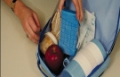
Keep Cold Foods Cold. Use an insulated lunch box and use a freezer gel pack. Make sure the foods are cold before they are packed. Sandwiches can be make ahead of time and kept refrigerated or frozen before placing in lunch box. Refrigerate fruit cups. Place perishable foods around ice pack. You can also freeze a bottle of water or juice box to help keep things cold.
Keep Hot Foods Hot. For hot foods, use an insulated bottle in an insulated lunch box. Fill the bottle with boiling water and let stand for a few minutes, then empty and fill with hot foods.
Consider pantry-safe foods packed in easy-to-open containers, like tuna that can be eaten out of the can. Dried fruits, peanut butter, crackers, juice sold unrefrigerated can tolerate room temperature.
Discard any food left in lunch box when child gets home. Do not reuse any plastic bags as they could contaminate other foods.
Written by Tiffany Glenn, M.S., R.D.,L.D. Registered Dietitian
www.Nytimes/com/2011/08/30/health/30brody
www.Blog.cleveland.com/taste_impact/print
www.fsis.usda.gov/PDF/Keeping_Bag_Lunches_Safe.pdf |

|
FoodPyramid.comFoodPyramid.com provides its audience with news and information about nutrition and diets. We give you a full understanding of what a food pyramid is and how you can implement it in your lifestyle. We also discuss health related topics and our mission is to empower individuals to make positive changes in their food and health choices.
http://www.foodpyramid.com/ |

|
Cooking With Your Children One of the best ways to familiarize your child with good food choices is to encourage her to cook with you. Let her get involved in the entire process, from planning the menus to shopping for ingredients to the actual food preparation and its serving.
When you are planning meals with her, refer to the Food Pyramid, and try to include items from the important food groups. Explain the importance of making low-fat choices whenever possible, choosing chicken and fish rather than red meat in most cases, or choosing low-fat cheeses over higher-fat varieties. Particularly in her first few efforts at helping in the kitchen, let her select recipes that she and other family members have enjoyed in the past, so she can see what's involved in preparing them.
In assigning tasks to your child, keep in mind that they need to be age-appropriate. For instance, you wouldn't give a six-year-old a sharp knife to chop vegetables, although she can certainly wash the lettuce. Nor would you let her remove a hot, heavy casserole pot from the oven, although she can carefully open the oven door for you.
Here are some other guidelines to keep in mind:
* Make certain that you or another adult is in the kitchen at all times when your child is helping out.
* When your child pares vegetables, show her how to point sharp edges away from her to avoid accidents.
* Explain how she should weigh and measure ingredients.
* Use the rear burners when cooking on the stove. Make sure that pot handles are turned inward so children can't accidentally knock them off the stove.
* Teach your child the importance of using potholders when touching hot saucepans and other items.
* Shut off the oven and burners when you're finished cooking.
Source
Caring for Your School-Age Child: Ages 5 to 12 (Copyright © 2004 American Academy of Pediatrics)
|
|
Weight GainWe hear plenty about weight loss, but what about those that need to gain some weight? Believe it or not, sometimes weight gain can be as difficult! In order to gain a pound of weight a week, you need to consume 500 calories more each day than your body burns. IF you want to gain 2 pounds a week, then 1000 calories more a day. There are some great websites and phone apps that you can use these days to help you track your calorie intake such as my fitness pal, tap and track, etc. You can try the super tracker on choosemyplate.gov.
Here are some tips:
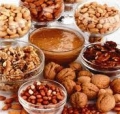
Eat foods that are higher in fat and deliver more calories, but be sure they are the healthy fats. That means low in saturated fat and trans fats. A good example would be peanut butter or nuts.
Choose foods with concentrated calories. Dried fruits, cheese, nuts/sunflower seeds, olives, juice, trail mix, sports bars are good examples. You can also add things like dry milk powder to drinks and cream soups.
Eat more frequently. Eat 5 – 6 smaller meals a day. You don’t have to feel stuffed because you’ll be eating again soon.
Drink fluids after your meals. You’ll save more room for food.
Don’t fill up on empty calorie food and drinks like diet sodas, coffee, tea and water. Drink juice, milk and shakes for added calories.
Have a bedtime snack. Cereal with milk, peanut butter and crackers or ½ sandwich and fruit, granola bar and yogurt, etc.
Add a shake or smoothie. Try Carnation Instant Breakfast.
If you are an athlete, be sure you are getting enough high quality protein (meat, chicken, fish, eggs, etc.) and carbohydrates for energy (pasta, cereal, rolls, corn, potatoes, juice, dried fruits, etc.) Consume about 500 calories right after a workout (about 1/3 from protein and 2/3 from carbohydrates).
Some information in this article was obtained from Complete Food and Nutrition Guide, 3rd edition. Roberta Larson Duyff
Written by Tiffany Glenn, M.S., R.D.,L.D. Registered Dietitian
|

|
Parents' Best-Kept Secrets to Delivering the Good Stuff to Kids"Eat your vegetables!" has been the mantra of the frustrated parents of picky eaters for generations. And the encouragement is needed now more than ever as recent research from the National Cancer Institute in Bethesda, Md. found that 40 percent of the calories children ages 2 to 18 consumed were empty calories.
So what is the secret to getting kids to eat their other veggies and follow other "moms know best' advice"? Enter www.ClubMum.net, an online community for parents featuring four bloggers (who just so happen to be parents) dedicated to sharing their best-kept secrets and tips on how to deliver the good stuff to their kids.
Sponsored by Chef Boyardee, Club Mum is lead by a panel of four mom bloggers who tell of their own struggles and successes in keeping healthy foods on the home menu, keeping kids active in the colder months and finding engaging community service projects.
"Being a mom is tough work, and this online community is a great place to learn tips and tricks on parenting from other moms," says Jodi Grundig, mom blogger and Club Mum panelist. Grundig is joined with Laurin Evans, Heather Spohr and Sylvia Martinez (who posts articles both in English and Spanish).
Here's a sampling of some of parents' best-kept secrets shared on the site:
* Grate apples or carrots and add them to the classic PBJ for some added fruits and veggies (not to mention some crunch).
* Puree onions, peppers or mushrooms and add them to pasta or pizza sauces for added flavor and nutrients.
* To get more whole grains and vegetables into your kids' diets, look for products they already love with added whole grains and vegetables.
* For super picky eaters, make a "menu" with a list of options - according to the mom bloggers, kids are more likely to eat the things they played a part in choosing.
* One great way to bond with your kids beyond the kitchen is to introduce a community service project like volunteering at a homeless shelter or participating in cleaning a public park.
Courtesy of ARAContent.com
|

|
Picky Eaters Although toddlers are beginning to develop food preferences, they also can be unpredictable about what they may want for a particular meal on a specific day. Their favorite food one day will end up being thrown on the floor the next. The food that they had spit out, day after day, will unexpectedly turn into the one they can’t get enough of.
Picky eating is often the norm for toddlers. For weeks, they may eat 1 or 2 preferred foods—and nothing else. They may eat a big breakfast or lunch and then show no interest in eating much of anything else the rest of the day. Don’t become exasperated with this kind of behavior. Just make healthy food choices available to your youngster, and acknowledge that his appetite or food preferences today may be quite different than yesterday’s or tomorrow’s. That’s just the way toddlers are.
With time, your child’s appetite and eating behaviors will reach some equilibrium. He’ll find something he likes in a variety of healthy foods without much or any prompting from you. In the meantime, try dealing with picky eaters by giving them finger foods or table foods that they can feed to themselves. Just make sure these are healthy food choices such as slices of banana or small pieces of toast. Also avoid finger foods that could cause choking. Children don’t fully develop the grinding motion involved in chewing until they’re about 4 years old, so stick with foods that are small and easy to chew and avoid those that might be swallowed whole and get stuck in your toddler’s windpipe.
That means avoiding
* Raw carrots
* Large sections of hot dogs
* Raw celery
*Raw cherries with pits
*Whole grapes
*Round, hard candy
* Peanuts and other nuts
Even when your toddler is feeding himself, it’s a good idea to sit with him while he eats. He’s also old enough to join the rest of the family in eating at the dinner table. Use these family meals to model the healthy eating that you want your child to adopt for the rest of his life.
Source
A Parent's Guide to Childhood Obesity: A Road Map to Health (Copyright © 2006 American Academy of Pediatrics)
|

|
Will new school lunch programs discourage kids from eating their veggies?(ARA) - School lunches will be changing, thanks to the U.S. Department of Agriculture's complete overhaul of federally subsidized school lunch programs. But will all the changes be for the better? Possibly not, according to some experts and studies.
The changes, implemented over a period of years, aim to limit calories, reduce sodium and increase the consumption of vegetables and whole grains. "Improved nutrition is a laudable goal, but the realities of science and nutrition may surprise the government," says Morton Satin of the Salt Institute in Alexandria, Va. "Scientific studies show that kids are more likely to eat their vegetables if they have adequate salt."
"The promotion of healthy food choices in schools should be driven by knowledge and understanding of science and nutrition," Satin says. Dark green vegetables are among the most nutritious foods. However, they all contain very bitter phytochemicals that affect their palatability. Broccoli is a perfect example. Adding salt to these vegetables makes them taste much better. "There is a natural concern by some as to whether the current salt reduction ideology may end up having a negative impact on nutritious food choices and overall health," Satin adds.
A recent research paper from the University of Pennsylvania examined the response of tasters to varying amounts of salt in a range of foods that were naturally bitter, including vegetables and other foods deemed to be healthy. Reducing the salt intake made these foods less appealing, and as a result adversely affected the tasters' nutrient intake.
In another double-blind taste panel study conducted at Ohio State University, cooked broccoli was fed to individuals from three different age groups: children, adults and senior citizens. The broccoli florets were prepared with different levels of salt and the results made it clear that, even though participants were unaware as to which sample was which, salt significantly increased broccoli's palatability. Both children and seniors liked broccoli better with more salt on it -- up to 350 mg per 85 g serving of broccoli, the highest level of salt used for these two groups. For both children and adults, the broccoli's bitterness decreased as the level of salt increased.
"Based upon these results, it is likely that policies promoting population-wide restriction of salt in foods may result in significant segments of the population responding by avoiding the more bitter, but far more nutritious food choices or simply reaching for the salt shaker to make bitter better," Satin says.
In the United Kingdom similar actions backfired. Their government outlawed the use of salt in schools in 2005. Writing in the UK Telegraph, journalist Paul Eastham complained that, since the school ban on saltshakers, his 14-year-old daughter stopped eating vegetables, because they were so bland.
"All the goodness they promise to deliver remains untouched on the plate - a complete waste of nutrients, health potential and money - all because they remain unpalatable," Eastham wrote. "My daughter might not touch the 'bland' vegetables at school, but at home - where she is allowed to use salt - she clears her plate."
The World Health Organization points to iodized salt as key to eliminating iodine deficiency disorders, one of the most common - and preventable - world-wide causes of brain damage. The WHO calls iodized salt a "spectacularly simple, universally effective, wildly attractive and incredibly cheap 'weapon' against childhood mental retardation."
"Salt is a necessary nutrient," Satin notes. "Without adequate intake, serious consequences arise. If the United States continues down a path of forced sodium reduction, with no recognition of the science indicating many negative effects of such reduction, American children may have more serious worries than bland food and a diet lacking in vegetables. In some countries where pregnant women and children do not consume enough iodized salt, cognitive development is a serious problem in children. This is a problem remedied many years ago in the United States through the iodization of salt."
While proponents of the school lunch sodium reduction campaign may have the best of intentions for children, some science and health experts are skeptical. "I predict a lot of salad and vegetables will go in the trash can at local schools," says Lisa Katic, a registered dietician. "This will not help us improve childhood nutrition."
|
|
|
|